
ISO 42001 Clause 7.2 Competence
Introduction
Competence is a critical aspect of any management system, and ISO 42001 recognizes this by dedicating Clause 7.2 specifically to it. With the rapid rise and integration of artificial intelligence (AI) in various industries, it becomes essential to establish competence requirements for AI management systems.

Understanding The Importance of Competence In ISO 42001
- In the context of ISO 42001, competence plays a crucial role in ensuring the efficient implementation and maintenance of an artificial intelligence (AI) management system. Without a competent workforce, organizations may struggle to effectively harness the benefits AI can offer.
- Clause 7.2 of ISO 42001 focuses on establishing the necessary skills, knowledge, and experience for individuals involved in the AI management system. By outlining the competence requirements, this clause ensures that organizations can identify, recruit, and train professionals who possess the expertise needed to navigate the complexities of AI technology.
- Competence goes beyond technical knowledge. It also encompasses the ability to understand ethical considerations, data privacy, and cybersecurity, all of which are critical aspects of AI management. Ultimately, ensuring competence in AI management systems strengthens an organization's capability to minimize risk, optimize performance, and capitalize on the full potential of AI technology.
Competence Requirements for Artificial Intelligence Management

Developing Competence Through Training and Education
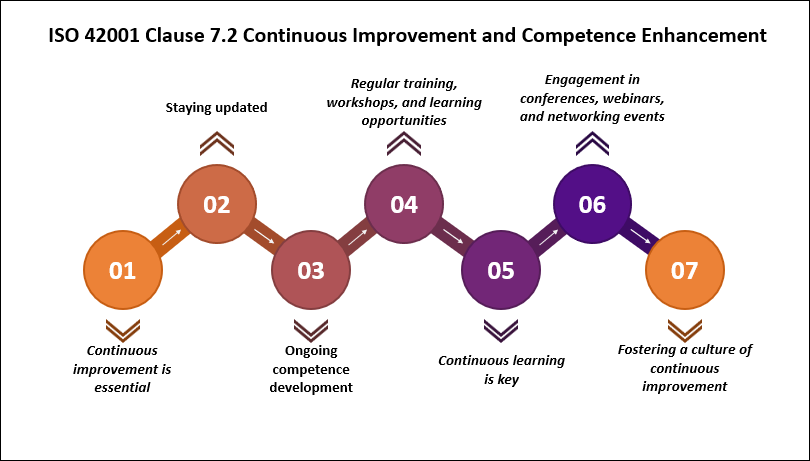
Continuous Improvement and Competence Enhancement
- Continuous improvement is a crucial aspect of managing artificial intelligence systems effectively. As the field of AI management rapidly evolves, it is imperative for organizations to stay updated with the latest advancements and ensure the sustained competence of their employees.
- One way to achieve continuous improvement is through ongoing competence development. This involves a systematic approach to identify and address knowledge gaps, skills deficiencies, and emerging areas of AI management. Organizations can provide regular training programs, workshops, and learning opportunities for their employees to enhance their competence in AI.
- Continuous learning is another significant component of competence enhancement. Employees should be encouraged to stay abreast of new technologies, industry trends, and best practices in AI management. This can be done through attending conferences, webinars, and networking events, as well as subscribing to relevant publications and online resources.
- By fostering a culture of continuous improvement and competence enhancement, organizations can ensure that their employees are equipped with the necessary skills and knowledge to effectively navigate the complex landscape of AI management.
Conclusion: Fostering A Competent AI Workforce with ISO 42001
Implement ISO Faster with a Complete Documentation System
ISO Toolkit for Your Standard
Pick your toolkit from 8 ready-to-use ISO toolkits available: ISO 27001, 9001, 14001, 45001, 22301, 20000, and 42001 (AI Governance).
✔ Complete ISO documentation framework
✔ Policies, procedures, templates, and records
✔ Risk management & internal audit templates
✔ Management Review and Nonconformance
✔ ISO Standard Mapped Implementation Plan
💡 All toolkits come with instant download, one-time payment, and unlimited email & chat support.
ISO PowerPack Bundle
Designed for teams, organizations, and consultants managing multiple ISO implementations across projects and clients.
✔ Unlimited internal and client use
✔ Deliver ISO services from day one
✔ Impress clients and auditors
✔ Skip months of document creation
✔ Grow your consulting business
💡All the benefits of our ISO toolkits combined in one powerful bundle — save over $1,000 compared to buying the toolkits individually.
